Project 04 · Implementation Evidence
FitFuel Nutrition — HubSpot CRM & Lifecycle Marketing
Sanitized evidence from a genuine HubSpot Free implementation for a fictional portfolio brand. Every contact shown is synthetic test data. Email assets were not sent, and the form was not launched to a real audience.
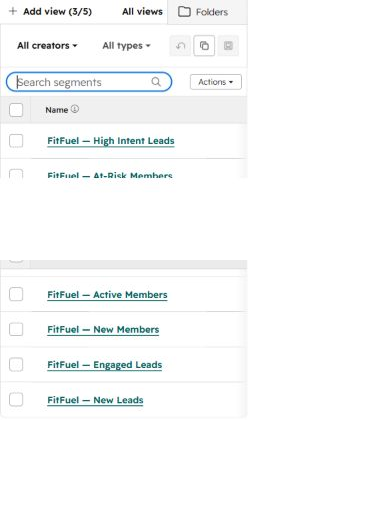
Six active lifecycle segments. The sanitized HubSpot inventory shows the FitFuel lifecycle structure. The verified baseline contained one synthetic record per segment.
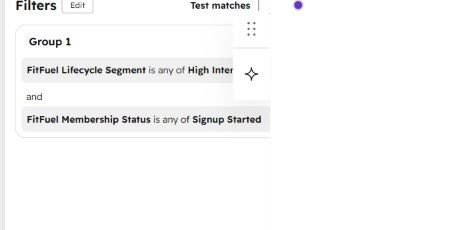
High-Intent lifecycle logic. Membership requires Lifecycle Segment = High Intent Lead and Membership Status = Signup Started. The separate Signup Status value is Started.
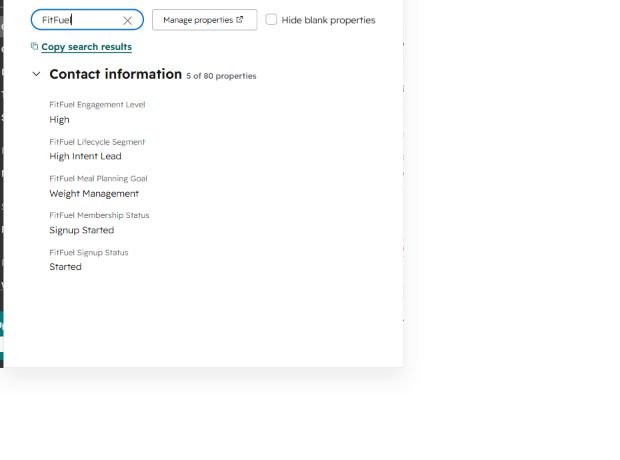
Five-field CRM configuration. A fictional High-Intent record shows Engagement, Lifecycle Segment, Meal Planning Goal, Membership Status, and Signup Status values. It is not a customer record.
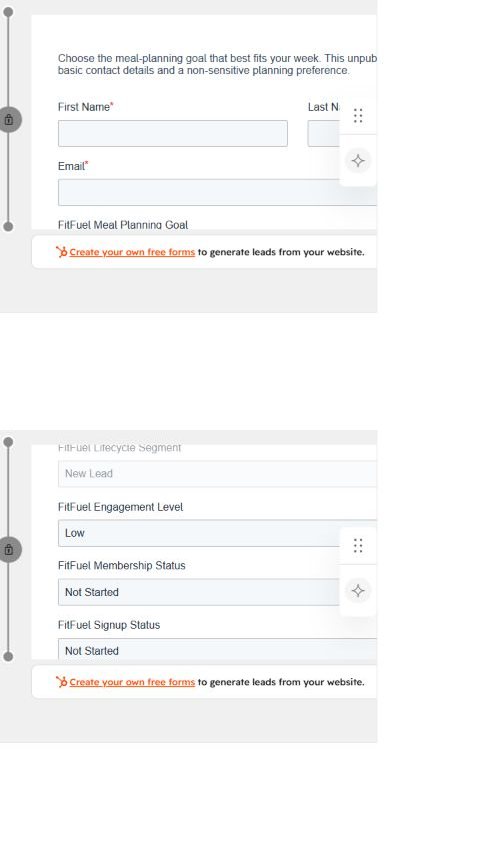
Lead-capture configuration. Required basic contact fields and meal-planning goal mapping are paired with New Lead, Low Engagement, Membership Not Started, and Signup Not Started defaults. It was not launched to a real audience.
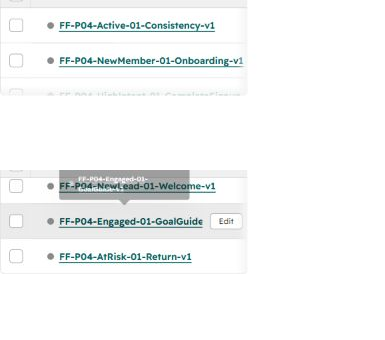
Six lifecycle email assets. The inventory covers New Lead, Engaged, High Intent, New Member, Active, and At-Risk stages. No audience was selected and no email was scheduled or sent.
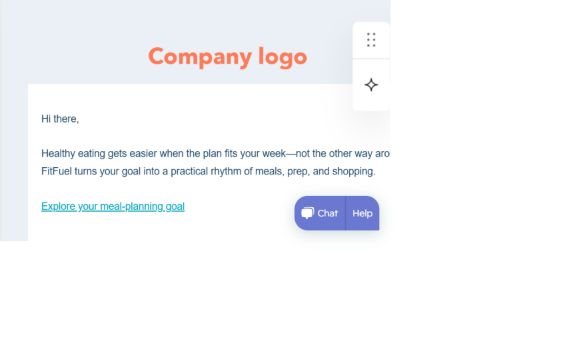
Representative email body and CTA. The New Lead asset includes approved lifecycle copy and the “Explore your meal-planning goal” CTA. Its verified link contains the HubSpot source, email medium, lifecycle campaign, and
newlead_01 content UTM.
Workflow execution boundary. HubSpot Free directed workflow access to a paid-tier screen. The trigger/action/exit architecture was documented, but no upgrade, workflow activation, or automated send was attempted.
Evidence Boundary
These captures demonstrate configuration and QA—not campaign performance. There were no real customers, sends, form submissions, opens, clicks, conversions, revenue, ROI, or attribution results.