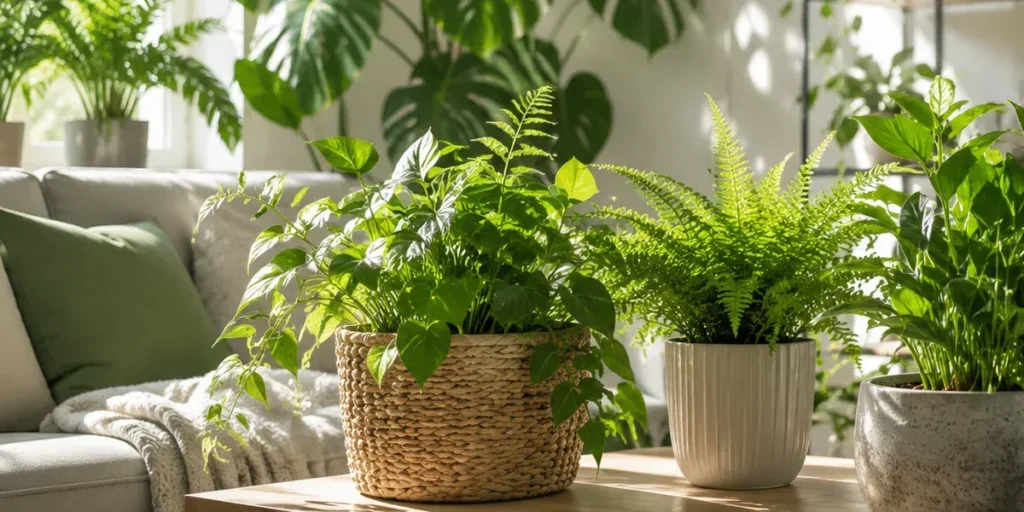
Keeping houseplants healthy doesn’t have to be complicated. Understanding a few basics such as light, watering, soil, humidity, and seasonal care can make it much easier to maintain thriving indoor plants. This indoor plant care guide covers 10 essential tips to help beginners build a simple and practical plant care routine.
Table of Contents
1.Understand Your Plant’s Light Requirements
Light is one of the most important factors in indoor plant care. Different houseplants have different light requirements, so placing a plant in the right location can make a major difference in its growth and overall condition.
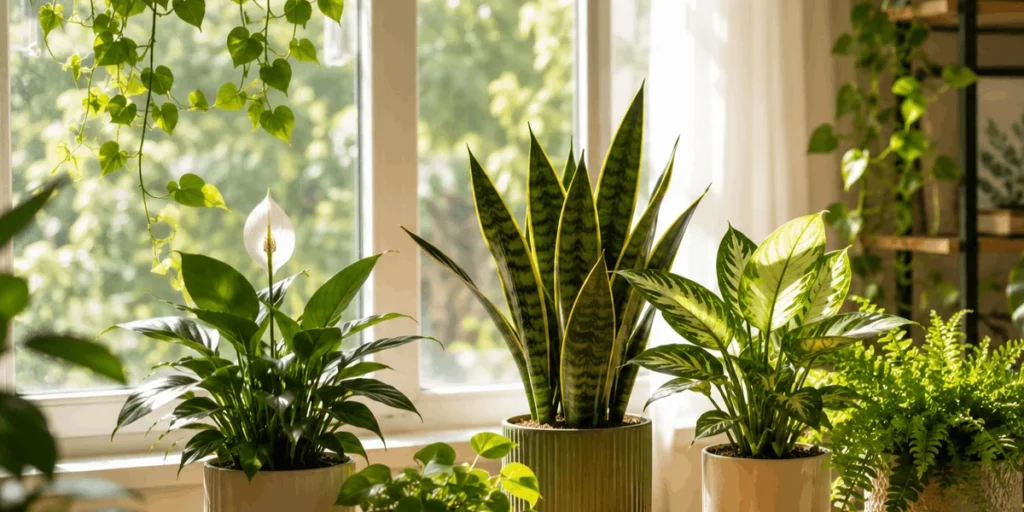
Bright indirect light generally means the plant receives plenty of natural light without being exposed to intense direct sunlight for long periods. Many common houseplants grow well under these conditions.
Lower light conditions receive less natural light and are better suited to plants that can tolerate reduced light levels. However, low light does not mean no light plants still need sufficient light for photosynthesis and healthy growth.
Direct light reaches the plant without being filtered by curtains or other objects. Some plants can tolerate or prefer direct sunlight, while others may develop leaf damage when exposed to excessive intense sun.
Watch how light changes throughout the day before deciding where to place a plant. Window direction, season, nearby buildings, curtains, and distance from the window can all affect the amount of light a houseplant receives.
2.Water Indoor Plants the Right Way
Proper watering is an essential part of indoor plant care, but there is no single watering schedule that works for every houseplant. How often a plant needs water depends on factors such as the plant species, pot size, soil, temperature, humidity, light exposure, and season.
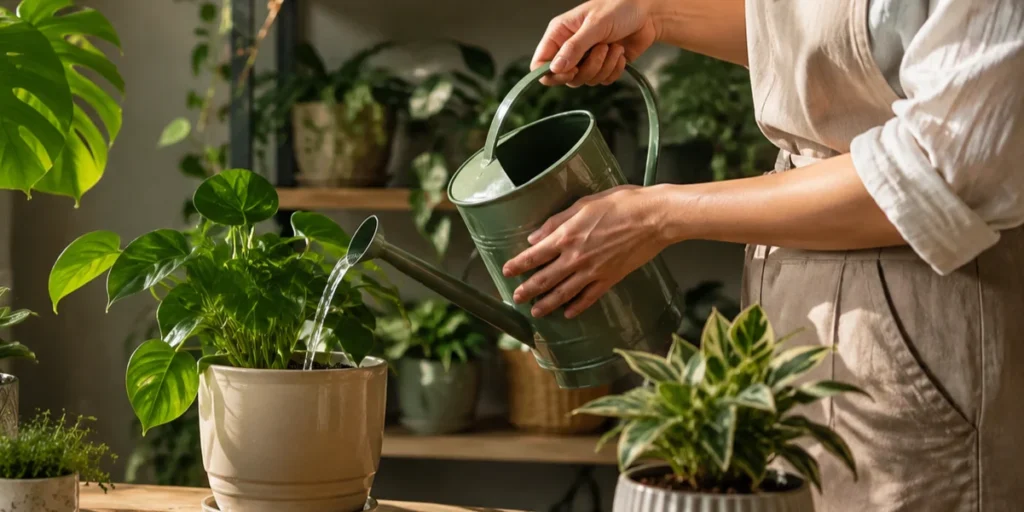
For additional guidance on watering houseplants, see the University of Minnesota Extension’s recommendations for indoor plant care.
Check the soil before watering: Instead of automatically watering on a fixed schedule, check the moisture level of the soil. For many common houseplants, allowing the upper layer of soil to dry slightly before watering can help prevent excess moisture.
Water thoroughly: When watering, apply enough water to moisten the root zone and allow excess water to drain through the bottom of the pot.
Avoid standing water: Empty excess water from saucers or decorative containers so the roots are not continuously sitting in water.
Watch the plant for clues: Wilting, yellowing leaves, dry soil, or consistently wet soil can indicate that your watering routine needs adjustment. Because similar symptoms can have different causes, check the soil and growing conditions before changing your routine.
A good plant care routine focuses on the plant’s actual needs rather than following the same watering frequency every week.
3.Choose the Right Soil and Pot
Healthy roots need an appropriate growing medium and container. The right combination of soil and pot drainage helps provide roots with access to both moisture and air.
Choose soil based on the plant: Different plants have different soil requirements. Succulents generally benefit from fast-draining mixes, while some tropical houseplants may prefer a mix that retains more moisture while still providing good drainage.
Use pots with drainage: Whenever possible, choose a container with drainage holes so excess water can escape after watering.
Avoid oversized pots: Moving a small plant into a much larger container can leave excess soil holding moisture around the roots for longer periods. When repotting, choose a container appropriate for the plant’s current root system.
Check the soil condition: Over time, potting mix can become compacted or lose its structure. If water drains poorly, roots are overcrowded, or the growing medium has significantly deteriorated, it may be time to consider repotting.
4.Maintain the Right Humidity
Humidity can influence how well some indoor plants adapt to the home environment. Many tropical houseplants naturally grow in more humid conditions, while other plants, including many succulents, generally perform well in drier indoor environments.
Group plants together: Placing plants near one another can create a slightly more humid microenvironment around their foliage.
Consider naturally humid rooms: Bathrooms and kitchens may provide higher humidity, but only place plants there if the room also provides suitable light.
Use a humidifier when necessary: For plants that require consistently higher humidity, a room humidifier can provide more reliable humidity than occasional misting.
Maintain airflow: Higher humidity should be balanced with adequate air circulation. Constantly damp conditions combined with poor airflow can contribute to plant problems.
Rather than trying to maximize humidity for every houseplant, match the environment to the requirements of the specific plant you are growing.
5.Keep Indoor Plants at a Comfortable Temperature
Temperature is another important part of indoor plant care. Many common houseplants grow well in the stable temperatures found inside homes, but sudden temperature changes can place unnecessary stress on plants.
Avoid cold drafts: Keep sensitive houseplants away from frequently opened exterior doors, cold windows, and strong air conditioning vents.
Watch for excessive heat: Avoid placing plants directly beside radiators, heating vents, fireplaces, or other strong heat sources that can dry the plant and soil quickly.
Consider window temperatures: Areas next to windows can become considerably warmer during sunny periods or colder during winter, even when the rest of the room feels comfortable.
Keep conditions relatively stable: When possible, avoid repeatedly moving plants between environments with dramatically different temperatures.
Always consider the requirements of the individual plant, since temperature tolerance varies between species.
6.Fertilize Indoor Plants Carefully
Indoor plants can gradually use nutrients available in their potting mix, so fertilizer can support growth when it is used appropriately. However, applying more fertilizer than a plant needs can damage roots and cause other problems.
Choose an appropriate fertilizer: Use a fertilizer suitable for houseplants and follow the product’s instructions for application and dilution.
Fertilize during active growth: Many houseplants use nutrients more actively when they are producing new growth. Their fertilizer needs may decrease during periods of slower growth.
Avoid overfertilizing: Applying fertilizer too frequently or at excessive concentrations can lead to salt buildup in the soil and potentially damage the plant.
Consider the individual plant: Fertilizer requirements vary by species, growing conditions, and potting mix. Research the needs of your specific plant instead of applying the same routine to every houseplant.
Fertilizer should complement proper light, watering, and soil conditions rather than compensate for problems caused by poor growing conditions.
7.Clean and Prune Your Houseplants
Regular cleaning and pruning can help keep indoor plants looking healthy while making it easier to inspect leaves and stems for potential problems.
Remove dust from leaves: Dust can accumulate on foliage over time. Gently wipe larger leaves with a soft, damp cloth, or carefully rinse suitable plants when needed.
Remove damaged foliage: Trim yellow, brown, dead, or badly damaged leaves using clean pruning tools. Removing unhealthy foliage can also improve the plant’s overall appearance.
Prune excessive growth: Some houseplants benefit from occasional pruning to maintain their shape or control leggy growth. Pruning requirements vary by plant species.
Use clean tools: Clean scissors or pruning shears before working with plants, particularly when moving between different plants.
Regular maintenance also gives you an opportunity to inspect the undersides of leaves, stems, and soil for early signs of pests or other plant care problems.
8.Know When to Repot Indoor Plants
Repotting gives an indoor plant additional growing space and an opportunity to refresh its potting mix, but plants do not need to be repotted simply because a certain amount of time has passed. Look for signs that the plant has outgrown its current container.
Check for crowded roots: Roots growing through drainage holes or tightly circling the inside of the pot can indicate that the plant needs additional space.
Watch how quickly the soil dries: If a plant requires water much more frequently than before because roots occupy most of the container, repotting may be appropriate.
Choose the next pot carefully: Move the plant into a container only slightly larger than its current pot rather than jumping to an excessively large container.
Use fresh, appropriate potting mix: Select a growing medium suited to the specific plant and make sure the new container provides adequate drainage.
Handle roots carefully: Remove the plant gently and inspect the root system before placing it into its new container. Avoid unnecessary root damage during the process.
9. Diagnose Common Houseplant Problems
A symptom is a clue, not a diagnosis. Check soil moisture, roots, light, temperature, humidity, pests, and recent changes together before changing a plant’s routine.
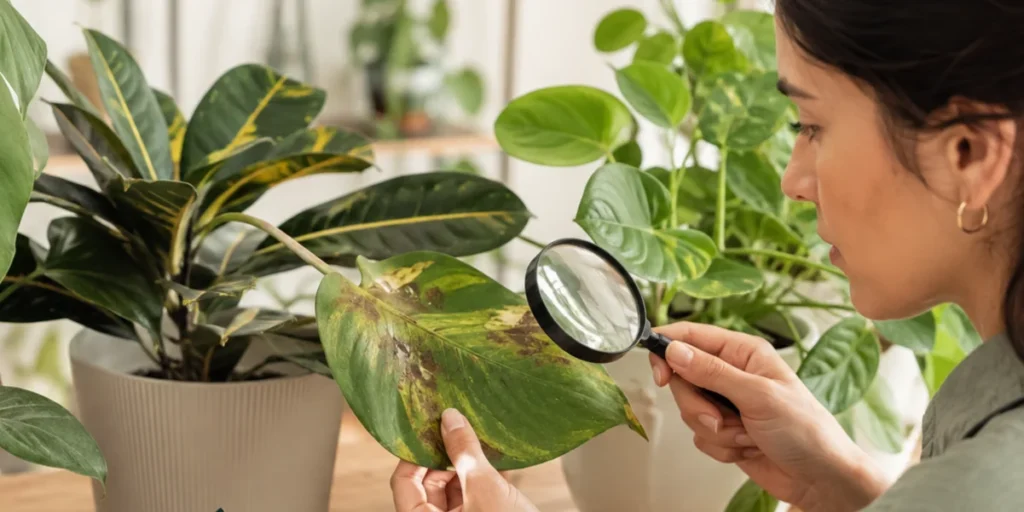
Why Do Indoor Plant Leaves Turn Yellow?
Yellow leaves may result from overly wet or dry soil, insufficient light, root stress, temperature changes, pests, nutrient issues, or normal aging. Check the soil and roots first, then compare the plant’s current placement and recent care with its species-specific needs. Iowa State University Extension provides additional guidance on yellowing and leaf drop.
How Can You Recognize Overwatering?
Consistently wet soil, yellowing leaves, soft growth, wilting despite wet soil, and an unpleasant smell from the potting mix can indicate excess moisture or damaged roots. Do not add more water until you have checked the soil, drainage, and root condition.
| Clue | Possible overwatering pattern | Possible underwatering pattern |
|---|---|---|
| Soil | Remains wet for an unusually long time | Feels dry through much of the root zone |
| Leaves | May yellow or feel soft | May curl, crisp, or feel dry |
| Wilting | Can occur while soil is still wet | Often occurs with dry soil |
| Next check | Drainage holes, roots, pot size, and watering frequency | Root-zone moisture and whether water reaches the full root ball |
Root-rot caution: Chronically saturated potting mix can deprive roots of oxygen and contribute to root decline or rot. If roots are dark, soft, or foul-smelling, isolate the plant, remove damaged material with clean tools, and correct the drainage and watering conditions. See Iowa State University Extension’s guides to diagnosing cultural problems and houseplant wilting.
What Causes Leggy Indoor Plant Growth?
Long stems, wide spacing between leaves, smaller new leaves, or growth leaning strongly toward a window can signal insufficient usable light. Move the plant gradually to a more suitable location, rotate it for balanced exposure, or use an appropriate grow light. Compare options in the low-light guide and review room placement in the plants-by-room guide.
Other checks: Brown edges can be associated with inconsistent watering, humidity, fertilizer salts, or environmental stress. For pests, inspect both sides of leaves and stems; separate affected plants while identifying the issue. The University of Minnesota Extension offers a houseplant pest guide.
10.Adjust Your Plant Care by Season
Indoor growing conditions can change throughout the year, so your plant care routine may need to change as well. Differences in daylight, temperature, humidity, and plant growth can affect how quickly soil dries and how actively a houseplant grows.
Spring: As daylight increases and plants begin producing more growth, check whether they need more frequent watering, fertilizer, pruning, or repotting.
Summer: Monitor soil moisture more frequently, especially for plants near bright windows where warmer conditions may cause the soil to dry faster.
Fall: As daylight decreases, some indoor plants may grow more slowly. Pay attention to changing watering needs rather than continuing the exact same summer routine.
Winter: Indoor heating can change humidity and temperature conditions. Plants may also use water more slowly when growth decreases, so always check the soil before watering.
Instead of following a fixed calendar, observe each plant and adjust its care based on its growth and indoor environment.
If you’re choosing plants for specific areas of your home, explore our Indoor Plants by Room guide.
Frequently Asked Questions
How often should I water indoor plants?
There is no single watering schedule that works for every indoor plant. Watering frequency depends on the plant species, soil, container size, light, temperature, humidity, and season. Check the soil moisture and the specific plant’s requirements before watering.
How do I know if my indoor plant is getting enough light?
Healthy growth can indicate that a plant is receiving suitable light, while unusually leggy growth, smaller new leaves, or growth leaning strongly toward a light source may indicate insufficient light. Always compare these signs with the requirements of the specific plant.
Why are my indoor plant leaves turning yellow?
Yellow leaves can have several causes, including watering problems, changing light conditions, natural leaf aging, or environmental stress. Check the soil, roots, lighting, and recent changes before adjusting your plant care routine.
Do indoor plants need fertilizer?
Many indoor plants can benefit from appropriate fertilization, particularly during periods of active growth. The amount and frequency depend on the plant and fertilizer product, so follow the product instructions and avoid excessive application.
When should I repot an indoor plant?
Consider repotting when roots become crowded, grow through drainage holes, or occupy much of the container. A plant that dries unusually quickly or has deteriorated potting mix may also benefit from repotting.
About this guide: Researched and compiled by Vidya Sagar Karri as an SEO portfolio demonstration for UrbanLeaf, a fictional indoor-plant brand. Plant-care and pet-safety statements are based on the authoritative sources cited in the guide. Last reviewed: September 14, 2026.
Final Thoughts
Successful indoor plant care comes down to understanding the needs of each plant and paying attention to how it responds to its environment. Light, watering, soil, humidity, temperature, fertilizing, pruning, and seasonal changes all work together to influence plant health.
Instead of following the same routine for every houseplant, observe your plants regularly and adjust their care when conditions change. Starting with a few simple habits checking soil before watering, providing appropriate light, maintaining drainage, and inspecting leaves regularly can make indoor plant care much easier for beginners.
Looking for plants that fit your home and lifestyle? Explore our Best Low Light Indoor Plants and Best Pet Friendly Indoor Plants guides to find options based on lighting conditions and pet considerations.