Finding the right indoor plant can be challenging when your home doesn’t receive much natural light. This guide compares low light indoor plants based on light needs, watering, size, care difficulty, and pet safety to help you choose an option that fits your space and routine.
Table of Contents
What Does “Low Light” Mean for an Indoor Plant?
Low light means limited indirect daylight—not complete darkness. A plant in low light usually grows more slowly, uses water less quickly, and needs careful placement. The best choice depends on the window direction, distance from the glass, seasonal changes, and nearby obstructions.
| Light situation | Practical meaning | Placement guidance |
|---|---|---|
| Bright indirect light | Strong daylight without prolonged direct sun on leaves | Near an east-facing window or filtered south/west exposure |
| Medium indirect light | Useful daylight for much of the day, with softer intensity | A few feet from a bright window, depending on obstructions |
| Low indirect light | Dimmer daylight; growth is usually slower | Farther from a window or near a north-facing window |
| No natural light | A room that is effectively dark during the day | Use an appropriate grow light; no houseplant thrives indefinitely without light |
Window Direction, Distance, and Seasonal Caveats
North-facing windows generally provide the least intense daylight, while east-facing windows offer gentler morning sun. South- and west-facing windows can be much brighter and may require sheer curtains or greater distance. Light drops quickly as a plant moves away from the window, and trees, buildings, screens, seasons, and latitude can change the result. Use the guidance as a starting point, then watch the plant’s growth and soil-drying rate.
For research-based guidance, see the University of Maryland Extension’s lighting for indoor plants resource and Iowa State University Extension’s houseplant care guide. You can also compare plants by room, review pet-friendly options, or troubleshoot issues in the indoor plant care guide.
Quick Comparison: Best Low Light Indoor Plants
| Plant | Light | Watering | Size | Care Level | Pet Safety |
|---|---|---|---|---|---|
| Snake Plant | Low to bright indirect | Allow soil to dry between watering | Medium–Tall | Easy | Not pet-safe |
| ZZ Plant | Low to bright indirect | Allow soil to dry well | Medium | Easy | Not pet-safe |
| Pothos | Low to bright indirect | Water when top soil dries | Trailing | Easy | Not pet-safe |
| Peace Lily | Low to medium indirect | Keep lightly moist | Medium | Moderate | Not pet-safe |
| Chinese Evergreen | Low to medium indirect | Water when top soil dries | Medium | Easy | Not pet-safe |
| Cast Iron Plant | Low to medium indirect | Allow partial drying | Medium–Tall | Easy | Generally considered pet-safe |
| Heartleaf Philodendron | Low to bright indirect | Water when top soil dries | Trailing | Easy | Not pet-safe |
| Parlor Palm | Low to medium indirect | Water after partial drying | Medium–Tall | Easy–Moderate | Generally considered pet-safe |
| Lucky Bamboo | Low to medium indirect | Maintain appropriate water/moisture | Small–Medium | Easy | Not pet-safe |
| Spider Plant | Low to bright indirect | Water after slight drying | Small–Medium | Easy | Generally considered pet-safe |
Note: “Low light” does not mean complete darkness. Most indoor plants still require some usable natural or artificial light to grow successfully.
10 Best Low Light Indoor Plants for Your Home
1.Snake Plant
Snake plants are a practical choice for homes with limited natural light because they can tolerate a wide range of indoor conditions. Their upright leaves also make them suitable for bedrooms, offices, and smaller spaces where floor space may be limited.
Light: Low to bright indirect light
Watering: Allow the soil to dry between waterings
Care Level: Easy
Best For: Beginners, bedrooms, offices and compact spaces
2.ZZ Plant
The ZZ plant is well suited to people looking for a low maintenance indoor plant. It can tolerate lower light environments and does not require frequent watering, making it particularly practical for busy households and office spaces.
Light: Low to bright indirect light
Watering: Allow the soil to dry well before watering again
Care Level: Easy
Best For: Offices, beginners and low maintenance spaces
3.Pothos
Pothos is a versatile trailing plant that can adapt to a range of indoor lighting conditions. Its cascading growth makes it useful for shelves, bookcases, and hanging planters where a traditional upright plant may not fit.
Light: Low to bright indirect light
Watering: Water when the upper portion of the soil begins to dry
Care Level: Easy
Best For: Shelves, hanging planters and beginners
4.Peace Lily
Peace lilies are often chosen for their dark green foliage and distinctive white blooms. They can tolerate lower-light environments, although brighter indirect light generally provides better conditions for flowering.
Light: Low to medium indirect light
Watering: Maintain consistent moisture without leaving the soil waterlogged
Care Level: Moderate
Best For: Living spaces and people comfortable with more regular watering
5.Chinese Evergreen
Chinese evergreen combines decorative foliage with relatively manageable care requirements. Different varieties offer a range of leaf patterns, making it useful for adding visual interest to rooms that receive limited direct sunlight.
Light: Low to medium indirect light
Watering: Water after the upper soil begins to dry
Care Level: Easy
Best For: Bedrooms, offices and decorative indoor spaces
6.Cast Iron Plant
The cast iron plant is known for its ability to tolerate less-than-ideal indoor conditions. Its broad, dark green leaves and upright growth make it a practical option for corners and rooms where natural light is limited.
Light: Low to medium indirect light
Watering: Allow the soil to partially dry between waterings
Care Level: Easy
Best For: Beginners, shaded rooms and low-maintenance spaces
7.Heartleaf Philodendron
Heartleaf philodendron is a trailing indoor plant that adapts well to different indoor environments. Its cascading growth works particularly well on shelves, hanging planters, and elevated surfaces.
Light: Low to bright indirect light
Watering: Water when the upper soil begins to dry
Care Level: Easy
Best For: Shelves, hanging displays and smaller living spaces
8.Parlor Palm
Parlor palms can bring height and soft greenery to indoor spaces without requiring intense sunlight. Their growth habit makes them particularly useful for living rooms, bedrooms, and office corners.
Light: Low to medium indirect light
Watering: Water after the soil partially dries
Care Level: Easy–Moderate
Best For: Living rooms, bedrooms and office spaces
9.Lucky Bamboo
Lucky bamboo is a compact option for desks, shelves, and smaller indoor spaces. It can adapt to lower-light conditions and can be grown using different setups depending on how the plant is maintained.
Light: Low to medium indirect light
Watering: Maintain appropriate moisture based on the growing setup
Care Level: Easy
Best For: Desks, shelves and small spaces
10.Spider Plant
Spider plants are recognizable by their arching foliage and smaller plantlets that develop as the plant matures. Their manageable size and adaptable growth make them useful for shelves, stands, and hanging planters.
Light: Low to bright indirect light
Watering: Water after the upper soil begins to dry
Care Level: Easy
Best For: Beginners, hanging planters and shelves
How to Choose a Low Light Indoor Plant
Consider Your Available Light
Start by observing how much natural light the room receives throughout the day. A room away from large windows may require plants that tolerate lower light conditions, while spaces near bright windows can support a wider range of indoor plants. Remember that low light is different from having no usable light at all.
Think About Watering Needs
Consider how frequently you’re realistically able to check and water your plants. Some indoor plants tolerate periods of dry soil better than others, while certain varieties benefit from more consistent moisture. Matching the plant to your routine can make long term care easier.
New to plant maintenance? Visit our Indoor Plant Care guide for practical care guidance.
Consider Plant Size and Available Space
Think about where the plant will live as it grows. Upright plants can work well in floor level corners, while compact or trailing varieties may be better suited to desks, shelves, and hanging planters. Choosing based on mature size can help prevent overcrowding later.
Have cats or dogs at home? Explore our Best Pet Friendly Indoor Plants for Your Home guide to find non toxic options for pet friendly spaces.
Check Pet Safety
If pets can access your plants, pet safety should be part of the selection process. Plant toxicity varies by species, so verify a plant’s suitability using a reliable veterinary or plant toxicity resource before bringing it into a pet-accessible space.
You can also explore our Pet Friendly Indoor Plants guide for options specifically selected with pet-conscious households in mind.
For species specific guidance, check the ASPCA’s plant toxicity database before placing a plant in a pet-accessible area.
Choose the Right Care Difficulty
Beginners may benefit from plants that tolerate occasional changes in watering or lighting conditions. More demanding varieties can still be rewarding, but they may require closer attention to moisture, humidity, and placement.
For additional options, explore our Best Indoor Plants guide.
Best Low Light Plants by Room
Bedroom
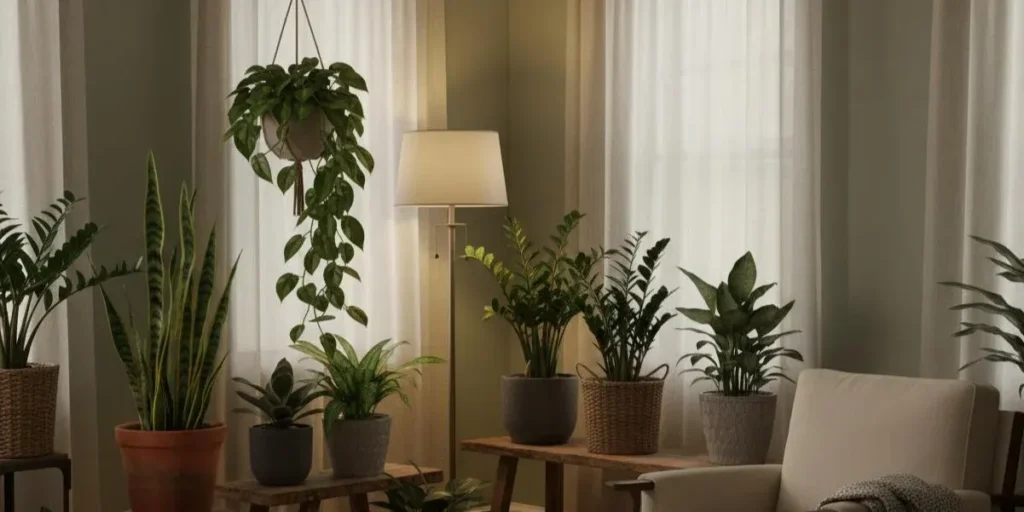
Bedrooms often benefit from plants that fit comfortably on nightstands, shelves, or unused corners without requiring intensive maintenance. Snake plants, ZZ plants, and parlor palms can be practical choices depending on the room’s available light and space.
Living Room
Living rooms usually offer more flexibility in plant size and placement. Taller options such as parlor palms or upright snake plants can fill empty corners, while pothos and heartleaf philodendrons can add trailing greenery to shelves and elevated surfaces.
Office
Office plants should generally be manageable around busy schedules and limited space. ZZ plants, snake plants, and lucky bamboo can work well on desks or in office areas where lighting conditions are relatively consistent.
Bathroom
Bathrooms can present different conditions because humidity, window availability, and temperature vary considerably between spaces. When choosing a bathroom plant, consider both available light and moisture rather than selecting a plant based on humidity alone.
Looking for more room specific ideas? Explore our Plants by Room guide to compare indoor plant options for different areas of the home.
Common Low Light Plant Problems
Yellow Leaves
Yellow leaves can have several causes, including excessive watering, poor drainage, changing light conditions, or the natural aging of older leaves. Instead of immediately adding more water, check the soil moisture and recent care conditions before making adjustments.
Overwatering
Overwatering is a common challenge with indoor plants, particularly in lower light environments where soil may dry more slowly. Check the soil before watering and make sure the container allows excess water to drain rather than remain around the roots.
Slow Growth
Plants growing in lower-light conditions may grow more slowly than plants receiving brighter indirect light. Seasonal changes can also affect growth, so slower development does not necessarily mean the plant is unhealthy.
Leggy Growth
Long stems, wider spacing between leaves, or growth stretching toward a window can indicate that a plant is seeking more light. Moving the plant closer to an appropriate light source or considering supplemental lighting may help.
Do Low Light Plants Need Grow Lights?
Not every low light indoor plant requires a grow light. If a room provides enough indirect natural light for the plant to maintain healthy growth, supplemental lighting may not be necessary.
However, grow lights can be useful in rooms with very limited natural light, during darker seasons, or when a plant shows signs that its current location is not providing enough usable light.
The goal is not to provide constant intense light, but to supplement the plant’s existing environment when natural light is insufficient.
Frequently Asked Questions
What indoor plants are best for low light?
Snake plants, ZZ plants, pothos, cast iron plants, and several other adaptable houseplants can tolerate lower light indoor environments. The best choice also depends on watering habits, available space, and household needs.
Can indoor plants survive without sunlight?
Plants require usable light for photosynthesis, although different species tolerate different light levels. A room that appears dim can still provide some indirect natural light, while spaces with little or no usable light may require supplemental lighting.
How often should I water low-light indoor plants?
There is no single watering schedule that works for every plant. Watering frequency depends on the plant species, soil, container, temperature, humidity, season, and available light. Checking soil conditions is generally more useful than following a fixed calendar.
Can I keep low-light plants in a windowless room?
A windowless room may not provide enough natural light for long term plant growth. In those environments, an appropriate artificial grow light may be needed to provide usable light.
Are low-light indoor plants easy for beginners?
Many plants that tolerate lower light environments are also relatively manageable for beginners, but care requirements still vary by species. Choosing a plant that matches your available light, watering habits, and space is more important than relying only on a “low maintenance” label.
About this guide: Researched and compiled by Vidya Sagar Karri as an SEO portfolio demonstration for UrbanLeaf, a fictional indoor-plant brand. Plant-care and pet-safety statements are based on the authoritative sources cited in the guide. Last reviewed: September 14, 2026.
Final Thoughts
Choosing the right low light indoor plant starts with understanding your space rather than simply choosing the most popular variety. Consider available light, watering needs, plant size, care difficulty, and household requirements before deciding.
By matching the plant to your environment and routine, you can create an indoor plant setup that is easier to maintain over time.