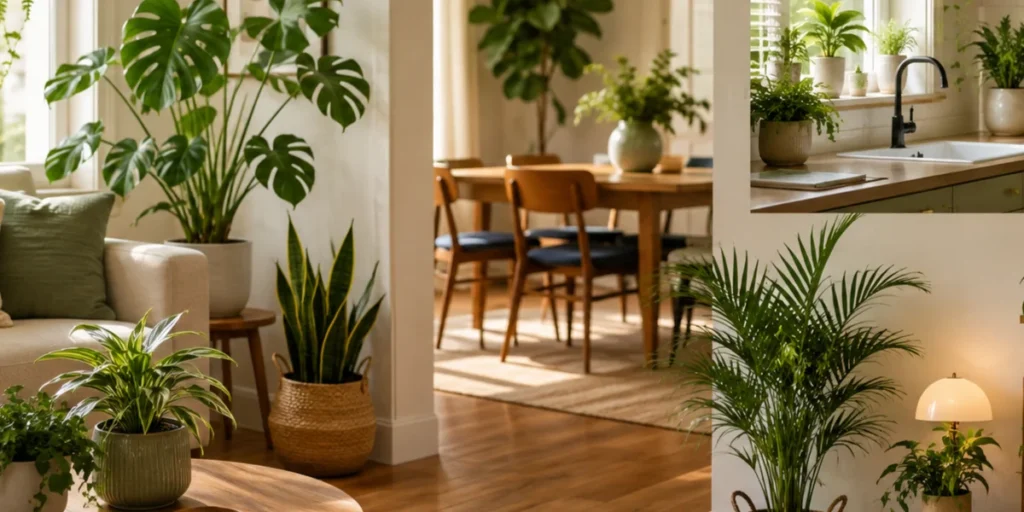
Choosing indoor plants based on the room they will live in can make plant care easier and help you create a more comfortable, attractive home. Each space has different lighting, humidity, temperature, and available space, so the same plant may not be suitable for every room.
This guide explores the best indoor plants by room, with practical options for living rooms, bedrooms, bathrooms, kitchens, home offices, and other spaces around your home.
Table of Contents
1. How to Choose Indoor Plants by Room
Choose a plant by matching its needs to the room—not by appearance alone. Check the usable daylight, humidity, available space, pet access, maintenance level, temperature changes, and drafts before deciding where a plant belongs.
| Room factor | What to check | Why it matters |
|---|---|---|
| Light | Window direction, intensity, distance, and obstructions | Light affects growth rate and water use |
| Humidity | Heating, air conditioning, showers, and cooking | Some plants need steadier humidity than others |
| Space | Mature height, width, and trailing growth | Prevents crowding and blocked walkways |
| Pets | Whether cats or dogs can reach the plant | Exact species should be checked for pet safety |
| Maintenance | Your realistic watering, pruning, and monitoring routine | A manageable plant is more likely to stay healthy |
| Temperature | Heat sources and seasonal room changes | Rapid temperature swings can stress foliage |
| Drafts | Doors, vents, fans, and frequently opened windows | Hot or cold airflow can dry or damage plants |
How Window Direction and Distance Change Indoor Light
North-facing windows typically provide gentler, lower-intensity light. East-facing windows often provide softer morning sun, while south- and west-facing windows may be significantly brighter and warmer. Light intensity falls as a plant moves away from the glass, and curtains, trees, nearby buildings, season, and latitude can alter the result.
Review the University of Maryland Extension’s indoor-plant lighting guidance and plant-selection guidance. For related decisions, compare low-light plants, verify pet-friendly options, and use the care guide.
2.Best Indoor Plants for the Living Room
Living rooms often provide more floor space and flexible plant placement options than other areas of the home. Before choosing a plant, consider the room’s window direction, available natural light, and how much space the plant will have as it grows.
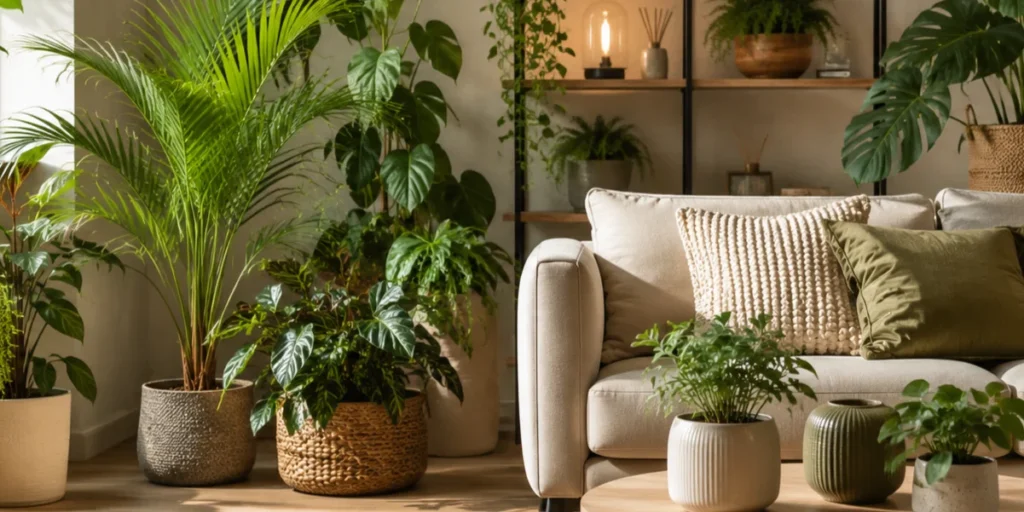
Parlor Palm: Its arching foliage makes it an attractive option for living spaces. It can tolerate lower light conditions, although suitable indirect light supports healthier growth.
Cast Iron Plant: A practical option for living rooms that receive limited natural light. It is relatively low maintenance and can work well as a floor or corner plant.
Spider Plant: A versatile choice that can be displayed on shelves, plant stands, or in hanging planters. Its cascading growth can add greenery without requiring much floor space.
Boston Fern: A fuller foliage option for living rooms with suitable indirect light and higher humidity. It generally requires more consistent moisture and humidity than some easier care houseplants.
3.Best Indoor Plants for the Bedroom
Bedrooms often benefit from plants that fit comfortably on shelves, dressers, windowsills, or small plant stands. Choose plants based primarily on the room’s available light and the amount of care you can consistently provide.
Parlor Palm: A good option for bedrooms with low to bright indirect light. Its upright, soft foliage can add greenery without requiring intense direct sunlight.
Spider Plant: Works well on bedroom shelves or in hanging planters and can tolerate a range of indirect light conditions.
Cast Iron Plant: A useful choice for bedrooms with lower natural light. Its relatively low maintenance care requirements can also make it suitable for beginners.
African Violet: A compact flowering option for bedrooms with bright indirect light. Its smaller size makes it particularly suitable for windowsills, dressers, and shelves.
Have cats or dogs? Explore our Best Pet Friendly Indoor Plants for Your Home guide before choosing plants for spaces your pets can access.
4.Best Indoor Plants for the Bathroom
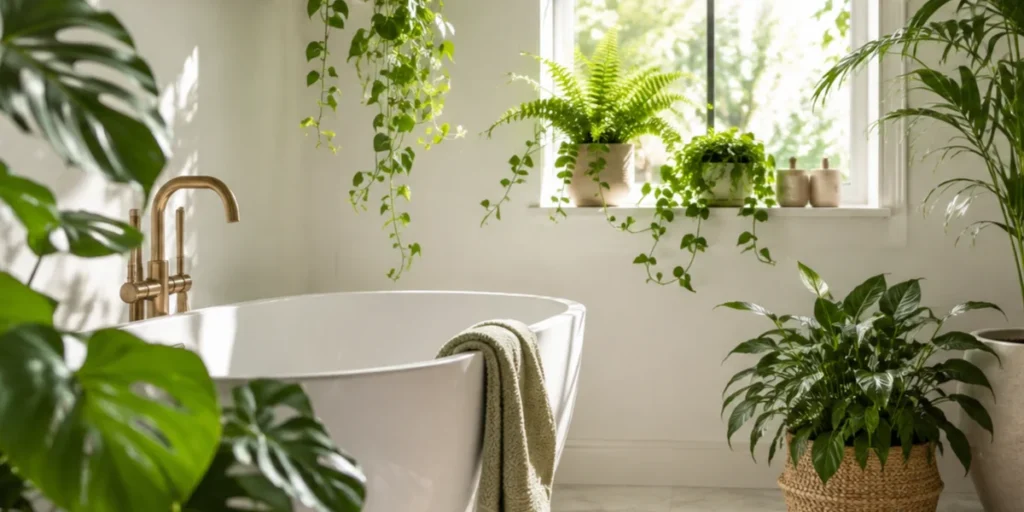
Bathrooms can provide higher humidity than many other rooms, but humidity alone does not make a bathroom suitable for plants. The room still needs enough natural or supplemental light for the plant you choose.
For additional guidance on choosing and caring for houseplants, see the University of Minnesota Extension’s houseplant growing guide.
Boston Fern: A strong option for bathrooms with bright indirect light and higher humidity. Keep its growing medium appropriately moist and avoid allowing it to remain waterlogged.
Parlor Palm: Can work well in bathrooms that receive low to bright indirect light. Its compact growth also makes it suitable for corners or plant stands.
Spider Plant: Adaptable to a range of indirect light conditions and works particularly well in hanging planters when bathroom counter space is limited.
Phalaenopsis Orchid: A decorative flowering option for bathrooms with suitable bright indirect light and appropriate airflow.
Before placing any plant in a bathroom without windows, remember that low light does not mean no light; plants still require an appropriate light source to grow.
5.Best Indoor Plants for the Kitchen
Kitchens can be great places for indoor plants when there is sufficient natural light and enough space away from cooking surfaces. Consider temperature changes, available counter space, and proximity to heat when deciding where to place a plant.
Spider Plant: A practical option for hanging planters or shelves, helping add greenery without using valuable counter space.
African Violet: Its compact size makes it suitable for a bright kitchen windowsill or shelf with indirect light.
American Rubber Plant (Peperomia obtusifolia): A compact option with thick, glossy foliage that can fit comfortably on shelves and counters with suitable indirect light.
Phalaenopsis Orchid: Can provide a decorative flowering element in kitchens with bright indirect light and appropriate growing conditions.
Placement tip: Keep houseplants away from hot stovetops, ovens, strong drafts, and areas where cooking activity could repeatedly expose them to excessive heat.
6.Best Indoor Plants for the Home Office
Home offices often have limited desk and shelf space, so compact, easy-to-place houseplants can work especially well. Choose plants based on the available natural light and position them where they will not interfere with your workspace.
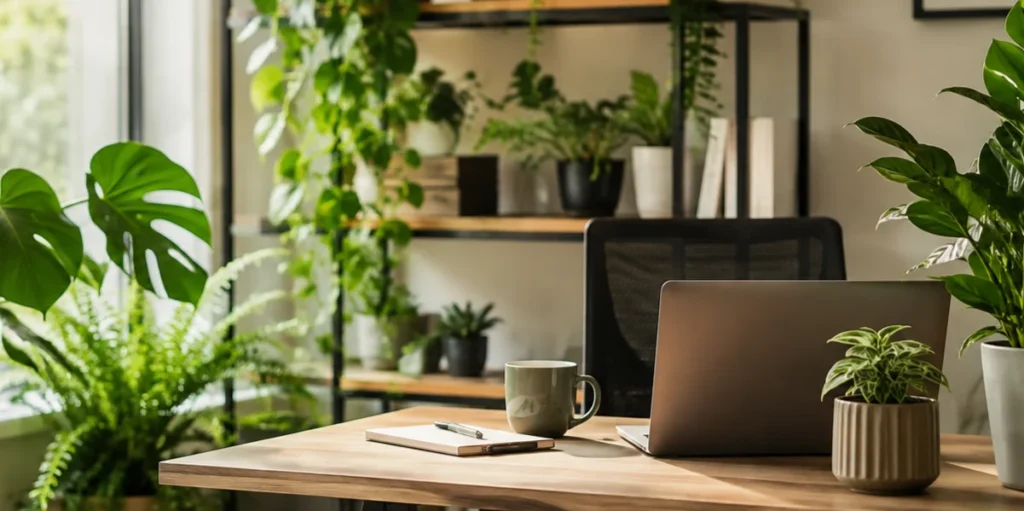
American Rubber Plant (Peperomia obtusifolia): Its compact size and glossy foliage make it a practical option for desks and shelves with suitable indirect light.
African Violet: A small flowering plant that can add color to a workspace without taking up much room. It performs best with bright indirect light.
Spider Plant: Works well on shelves or in hanging planters and can be useful when you want greenery without sacrificing desk space.
Parlor Palm: A good option for larger home offices where there is room for a plant stand or floor-level display.
Workspace tip: Avoid positioning plants where computer equipment, cables, or electronics could be exposed to water during plant care.
7.Best Indoor Plants for Low Light Rooms
Rooms with limited natural light require plants that can tolerate lower light conditions. However, every plant still needs light to grow, so a dark room with no usable natural or supplemental light is not automatically suitable for houseplants.
Cast Iron Plant: One of the more adaptable choices for lower light spaces. Its durable foliage and relatively simple care requirements make it useful for bedrooms, living rooms, and hallways.
Parlor Palm: Can tolerate lower-light indoor environments while providing soft, upright foliage that works well in corners and larger spaces.
Spider Plant: Adaptable to a range of indoor light conditions, although brighter indirect light generally supports stronger growth.
Choosing the right location: Observe the room throughout the day before selecting a plant. Distance from windows, curtains, window direction, nearby buildings, and seasonal changes can significantly affect available light.
For more options and detailed care guidance, see our Best Low Light Indoor Plants for Your Home guide.
8.Best Pet Friendly Plants for Different Rooms
If cats or dogs share your home, plant selection should also consider pet safety. Some common houseplants can be toxic to pets, so verify the exact species before choosing a plant for an area your pets can access.
Some common houseplants can be toxic to pets, so verify the exact species before choosing a plant for an area your pets can access.
Living Room — Parlor Palm: Its attractive foliage works well in larger living spaces, and the ASPCA lists Parlor Palm as non toxic to cats and dogs.
Bedroom — Spider Plant: A versatile option for shelves or hanging planters. The ASPCA lists Spider Plant as non toxic to cats and dogs.
Bathroom — Boston Fern: Suitable for bathrooms with adequate indirect light and humidity. The ASPCA lists Boston Fern as non toxic to cats and dogs.
Home Office — American Rubber Plant (Peperomia obtusifolia): Its compact size makes it useful for desks and shelves, and the ASPCA lists it as non toxic to cats and dogs.
Remember that non toxic does not mean edible. Pets should still be discouraged from chewing or consuming houseplants.
See our Best Pet Friendly Indoor Plants for Your Home guide for more pet friendly options and care information.
Frequently Asked Questions
What are the best indoor plants for a living room?
The best choice depends on your living room’s light, space, and care conditions. Parlor Palm, Cast Iron Plant, Spider Plant, and Boston Fern are useful options for different indoor environments.
What indoor plants are good for bedrooms?
Parlor Palm, Spider Plant, Cast Iron Plant, and African Violet can work well in bedrooms when their individual light and care requirements are met.
Which indoor plants are best for bathrooms?
Boston Fern, Parlor Palm, Spider Plant, and Phalaenopsis Orchid can be suitable for bathrooms with appropriate light. Higher bathroom humidity can benefit some plants, but adequate light and airflow are still important.
What indoor plants work well in low light rooms?
Cast Iron Plant and Parlor Palm can tolerate lower light conditions, while Spider Plant can adapt to a range of indirect light environments. Low light should not be confused with complete darkness.
How do I choose a plant for a specific room?
Start by evaluating the room’s natural light, humidity, temperature, available space, and accessibility to pets. Then choose a plant whose growing requirements match those conditions and your preferred level of maintenance.
About this guide: Researched and compiled by Vidya Sagar Karri as an SEO portfolio demonstration for UrbanLeaf, a fictional indoor-plant brand. Plant-care and pet-safety statements are based on the authoritative sources cited in the guide. Last reviewed: September 14, 2026.
Final Thoughts
Choosing the best indoor plants by room starts with understanding the environment of each space rather than simply choosing a plant based on appearance.
Start by observing the conditions in each room, then select plants whose needs match those conditions. With thoughtful placement and consistent care, you can create a healthy indoor plant collection throughout your home.
Need more help choosing the right plants? Explore our Best Low Light Indoor Plants, Best Pet Friendly Indoor Plants, and Indoor Plant Care Guide for more detailed recommendations and care tips.